Project / 06
Bellicopter
- Mechanical
- CAD
- Electronics
A three-pound combat robot with a belt-driven overhead weapon, built by four classmates for a school tournament.
Snapshot
The fast read
- Role
- CAD, electronics, driver
- Year
- 2023–24
- Type
- Competition
- Team
- Four classmates
- Stack
- Fusion 360, AR500 steel, Brushed drive motors, 1100 KV brushless weapon motor, FS-iA6 receiver
- Tags
- Mechanical · CAD · Electronics
Section
The event
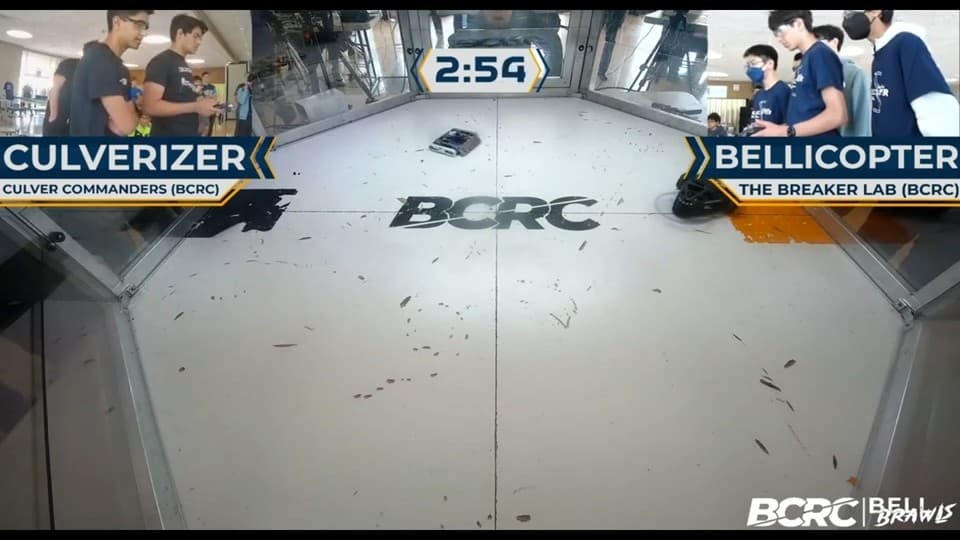
Bell Brawls is the school's annual combat-robotics tournament. Bellicopter was the three-pound entry built by four classmates, fighting in a sealed arena against other student teams.
Section
The robot
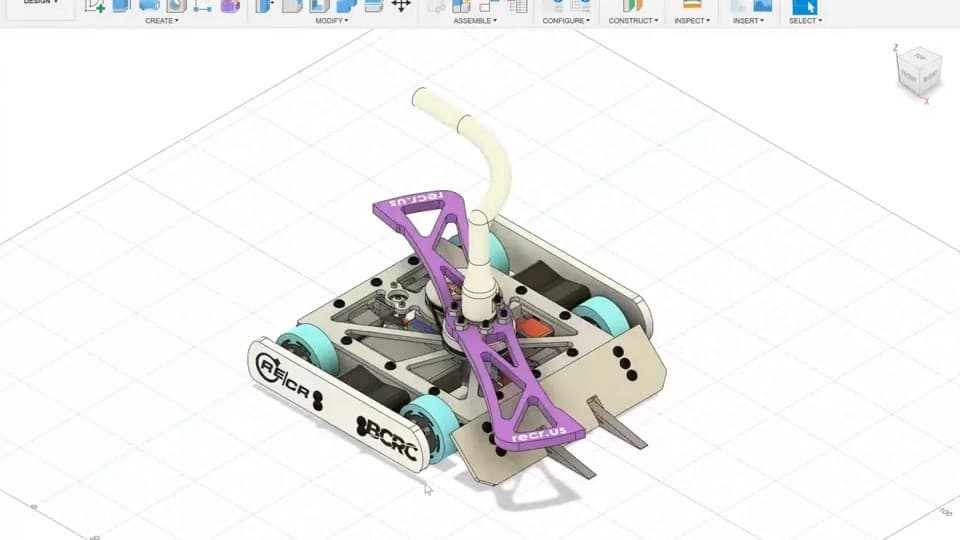
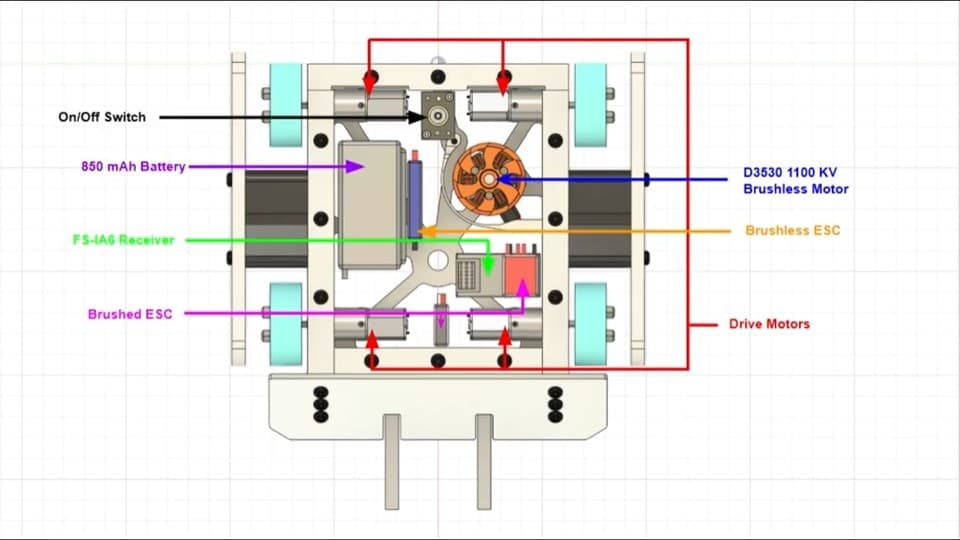
Four brushed motors drive the robot and a 1100 KV brushless motor spins the weapon, each through its own speed controller, all running off a single 850 mAh battery. An RC receiver handles driving and spinning up the weapon from a handset.
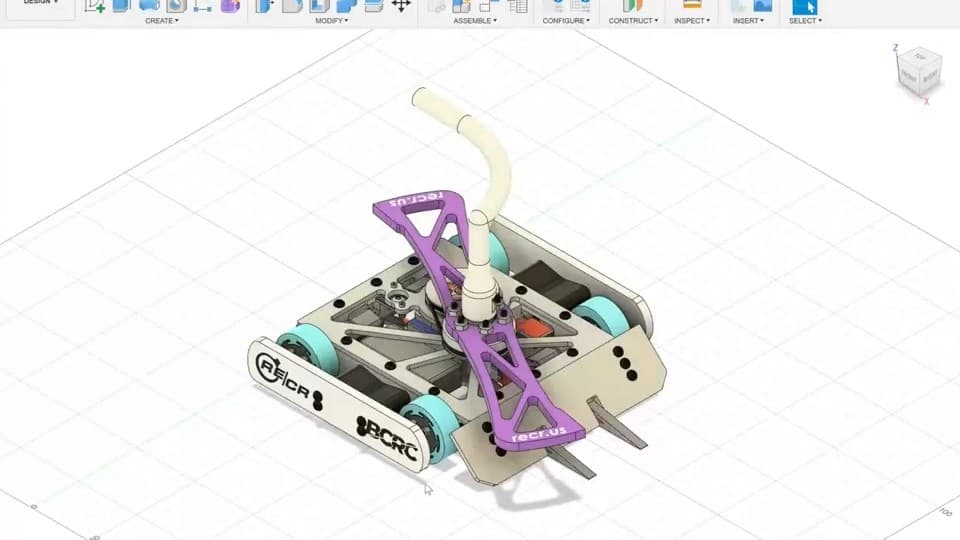
The overhead weapon was drawn in Fusion 360 and cut from AR500 steel by R/E Combat Robotics.
Across a team of four I drew the master sketch the robot was built around, then modelled a good deal of what hangs off it — the wheel motor jigs and parts of the chassis. Teammates did most of the manufacturing: laser cutting, 3D printing and casting. I soldered most of the electronics, and drove the robot at competitions.
Section
Engineering decisions
The weapon does not sit on the motor shaft. It runs on a pulley-driven stack instead, so the shock of an impact is not delivered straight into the motor — the belt absorbs some of what would otherwise go through the bearings.
Section
The flipping problem
The robot kept ending up on its back, and once over it could not right itself — which in a timed match is as good as losing. The fix used what the robot already had: a jig on top that spins with the blade, so the weapon's own momentum pushes the robot back onto its wheels.
Section
On film
Thirty seconds from the maker portfolio film: the robot in CAD, the electronics laid out, and match footage from the tournament.
Section
Numbers
The final design reaches roughly 12,210 rpm and delivers about 4,500 N at an ideal impact — calculated figures for the design rather than measurements taken from a match.
Next project